Tuesday, May 28, 2024

Government Publishing Office (GPO) and Authentic Official Publications

Home Page Banner 

The U.S. GOVERNMENT PUBLISHING OFFICE (GPO) is the official, digital and secure source for producing, protecting, preserving and distributing the official publications and information products of the Federal Government.

GPO provides public access to the official publications and information of the Government. GPO’s mission can be traced to the requirement in Article I of the Constitution that each House keep a journal of its proceedings and from time to time publish the same.

When GPO signs and certifies a digital document, a blue ribbon icon appears right beneath the top navigation menu and also in the Signature Panel within Adobe Acrobat or Reader. When users print a document that has been signed and certified by GPO, the Seal of Authenticity will automatically print on the document, but the ribbon will not print. 

Try This:

Click here to open the document. Is it authenticated by GPO?
(Note: You need to open the document within
Adobe Acrobat or Reader to check the Blue Ribbon Icon and the GPO's Seal of Authenticity.)

blue ribbon icon

Image above: Blue Ribbon Icon

Seal of Authenticity

Image above: GPO's Seal of Authenticity


Follow Kelley Center Government Information blogs to learn more.
You are also invited to explore more authentic official government publications and use our services to enhance your research: check out our research guides at https://libguides.rice.edu/gov , visit the Kelley Center, or schedule an appointment with Anna Xiong, your FDLP Representative at Fondren Library: govhelp@rice.edu.

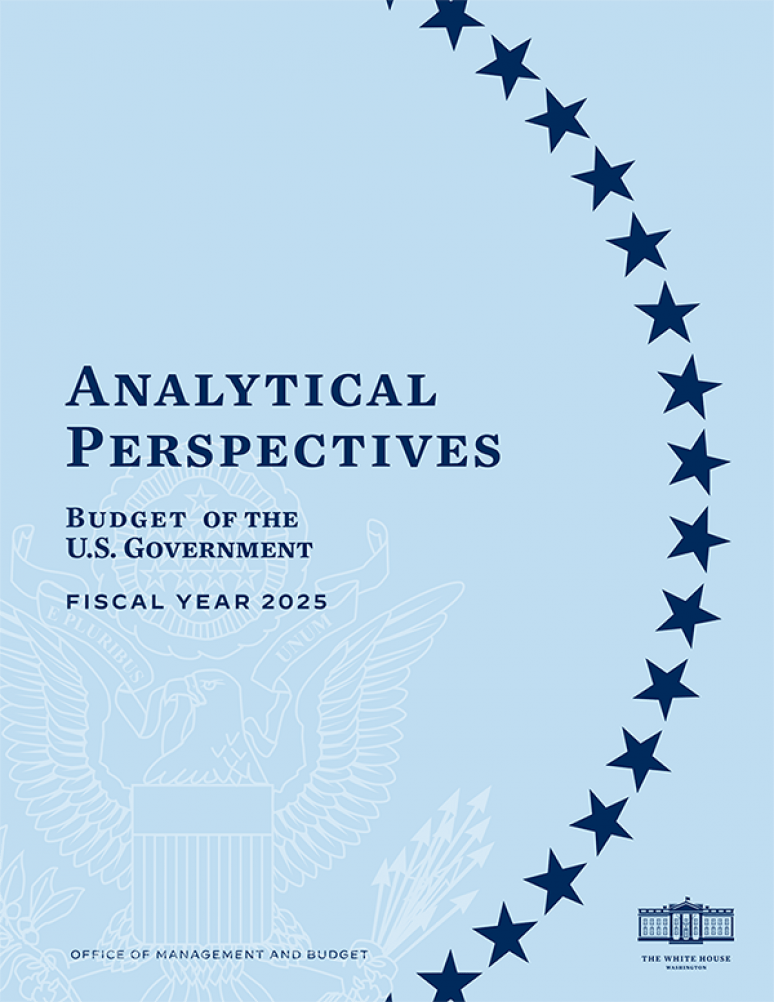
Featured New U.S. Federal Publication: Budget FY 2025 - Analytical Perspectives, Budget of the United States Government, Fiscal Year 2025


Budget of The U.S. Government, Analytical Perspectives, 2025 

This government document contains analyses that are designed to highlight specified subject areas or provide other significant presentations of budget data that place the budget in perspective. This volume includes: economic and accounting analyses; information on Federal receipts and collections; analyses of Federal spending; information on Federal borrowing and debt; baseline or current services estimates; and other technical presentations.

Click here to access the free online full text of this publication.

Questions For You

The authentication matters.
Is this online document an authenticated official version and how do you know?
Who or which government agency has issued this document?
What is the name of the publisher of the document?

Find out the answer oexplore more government information resources and conduct research on more topics, check out https://libguides.rice.edu/gov, visit the Kelley Center, or schedule an appointment with Anna Xiong, your FDLP Representative at Fondren Library: govhelp@rice.edu.


Monday, May 13, 2024

Find Your Family in Federal Records

The National Archives keeps track of our nation’s most important documents – from our foundational documents such as the Constitution to current materials essential to our national security.  But did you know that the NARA can help you with your own essential, foundational papers? 

Every year the National Archives hosts a series of educational webinars on genealogy research using national records. The sessions, hosted on the U.S. National Archives YouTube channel, are free and intended for all levels of expertise – from novices to experienced researchers. 

Lecture schedule, topic descriptions, videos, and handouts are available at the 2024 Genealogy Series web page. 

Sessions begin May 21st and continue to the end of June.  They will all be broadcast Tuesdays at 1pm EST.  However, videos and handouts will remain after the event has ended. 

No registration is needed.  Just go to the series webpage and click on the appropriate link for the topic(s) you are interested in. 


From the National Archives press release:

Background: The National Archives holds the permanently valuable records of the federal government. These include records of interest to genealogists, such as pension files, ship passenger lists, census, and Freedmen’s Bureau materials. See “Resources for Genealogists” online.


Tuesday, April 16, 2024

Big News! Federal race & ethnicity collection standards have CHANGED

Federal Race and Ethnicity Collection Standards Have Changed


Check it out!

There are a lot to read about in the newly revised OMB Statistical Policy Directive No. 15: Standards for Maintaining, Collecting, and Presenting Federal Data on Race and Ethinicity, published 3-29-2024. 

Federal Register citation is 89 FR 22182. There are several key revisions but one of the most important is the inclusion of Middle Eastern or North African (MENA) as a race.

How do you think about this change?

This revision has received over 1800 public comments. If you are interested in reading those comments and need assistance with finding and accessing the information, email govhelp@rice.edu or visit Kelley Center informaiton desk for help.

Monday, April 15, 2024

National Parks Week


Grand Tetons National Park/Photo by Nate Foong on Unsplash


429

That’s number of National Parks in the United States.  These include national seashores, historical sites, and recreation areas.  To celebrate them, the National Parks Service, part of the Department of the Interior, is devoting April 20th through April 28th as National Park Week.

To kick off the week of celebration, and to showcase the variety and grandeur of our National Park system, April 20th is a day of no entrance fee into any of the parks.  (The NPS offers six days in the year with no entrance fees.)

Each day of National Parks Week has a different theme:

Saturday, April 20: Discovery. What will you discover? A new place, a new interesting fact, a new activity... To kick off National Park Week and encourage you make that new discovery, entrance fees are waived on April 20!

Sunday, April 21: Volunteers. Use your time and talents as a volunteer in your national parks. Find opportunities to volunteer for a single event or long term position.

Monday, April 22: Earth Day. Join the global celebration encouraging education and stewardship of the planet's natural resources. Many parks are hosting volunteer events. You can also find ways to practice conservation at home.

Tuesday, April 23: Innovation. History of our nation's innovation is preserved in national parks. Also learn about the innovative projects happening in parks or through our programs today.

Wednesday, April 24: Workforce Wednesday. Meet our incredible workforce of employees, interns, fellows, volunteers, contractors, partners, and more. Consider joining our team!

Thursday, April 25: Youth Engagement. Calling the rising generation of stewards! Learn about the opportunities for youth and young adults to get involved and see what your peers are up to.

Friday, April 26: Community Connections. Learn about the important work our programs and partners are doing in communities across the country both within and outside of our park boundaries.

Saturday, April 27: Junior Ranger Day. For kids (and kids at heart), become a Junior Ranger through in-person or online activities to learn about special places or topics. You may even earn a Junior Ranger badge!

Sunday, April 28: Arts in Parks. Home of many arts past and present, find your muse creating arts within parks. Also learn about preserving and practicing arts in your communities through the work of our programs and partners.

13 of these National Parks are in Texas.  They are Alibates Flint Quarries National Monument in Fritch, Amistad National Recreation Area in Del Rio, Big Bend National Park in the big bend of the Rio Grande near Alpine, Big Thicket National Preserve in Beaumont, Blackwell School National Historic Site at Fort Davis, Butterfield Overland Historic Trail that covers Missouri, Arkansas, Oklahoma, Texas, New Mexico, Arizona, and California, Chamizal National Memorial in El Paso, El Camino Real de los Tejas National Historic Trail in Texas and Louisiana, El Camino Real de Tierra Adentro National Historic Trail in Texas and New Mexico, Fort Davis National Historic Site in Fort Davis, Guadalupe Mountains National Park in Salt Flat, Lake Meredith National Recreation Area in Fritch, Lyndon B Johnson National Historical Park in Johnson City, Padre Island National Seashore in Corpus Christi, Palo Alto Battlefield National Historical Park in Brownsville, Rio Grande Wild and Scenic River in Southwest Texas, San Antonio Missions National Historical Park in San Antonio, and Waco Mammoth National Monument in Waco. 


Big Bend National Park/Photo by Caleb Fisher on Unsplash


Thursday, April 11, 2024

Do You Have the Time?

Time stands still for no one.  Nor is it ever the same.  Because time varies so much on Earth, UTC, or Coordinated Universal Time, was defined as time at mean sea level.  UTC is only a theoretical ideal.  To realize it, International Atomic Time (TAI) weighs the average of hundreds of atomic clocks around the world.  UTC must periodically insert “leap seconds” to keep it aligned with Earth solar days since the rate of the Earth’s rotation changes, and solar days are not always the same. 

As if that isn’t complicated enough, measurement of Time in space differs depending on where you are.  The experience of time is slower where there is more gravity, so a second is longer on Earth than it is on the Moon.  It also is different from both these places if someone is moving through space at a high rate of speed. 

Since many governments, including the United States, and commercial entities are interested in returning to the Moon and establishing a presence there, as well as using it as a stopping point for going to Mars, there needs to be a standard measurement of time in space, specifically in cislunar space (i.e. the space lying between and the Earth and the Moon including the Moon’s orbit).  The White House Office of Science and Technology Policy (OSTP) has released a directive for NASA and the Departments of Commerce, Defense, State, and Transportation to establish and be ready to implement a unified time standard -- Coordinated Lunar Time (LTC) – by December 31, 2026.  NASA will also coordinate with the countries who have signed the ArtemisAccords. Time standardization is necessary for safety purposes, as well as economic development and international collaboration.  According to the OSTP policy memorandum:

“The approach to establish time standards consists of the definition, development, and implementation of a distinct reference time at each celestial body and its surrounding space environment. Each new time standard developed will include the following features:

1. Traceability to Coordinated Universal Time (UTC);

2. Accuracy sufficient to support precision navigation and science;

3. Resilience to loss of contact with Earth; and

4. Scalability to space environments beyond the Earth-Moon system

Federal agencies will develop celestial time standardization with an initial focus on the lunar surface and missions operating in Cislunar space, with sufficient traceability to support missions to other celestial bodies.”

The White House Office of Science and Technology Policy was created by the National Science and Technology Policy, Organization, andPriorities Act of 1976.  The OSTP heads the National Science and Technology Council (NSTC) and its Subcommittee on Cislunar Science & Technology.  The Subcommittee developed the National Cislunar Science and Technology Strategy on which the new policy memorandum builds. 

White House Office of Science and Technology Policy Releases Celestial Time Standardization Policy

Thursday, March 28, 2024

It's Complicated: Modernization Requires Legal Statute(s)

On March 20, 2024 the Modernization Subcommittee of the Committee on House Administration of the U.S. House of Representatives held a hearing entitled "Legislative Proposals to Support Modernizing the Congressional Research Service and the Use of Federal Data.” 

The Congressional Research Service, or CRS, serves as nonpartisan shared staff to congressional committees and Members of Congress. Since 1914, CRS has existed by law as a department of the Library of Congress and works directly for Congress. CRS gathers, synthesizes, and analyzes information and data to assist in the formation and enaction of legislation – from earliest bill drafting through oversight of implementation. The CRS approaches complex topics and policy issues with meticulous and comprehensive research, expert and diversified resources, confidential consultation, and a nonpartisan mindset. The statute empowering the CRS was last updated in 1970. 

Much of the information in CRS reports relies on data from the various Federal agencies which are under the authority of the Executive Branch of the government. Federal agencies are required by law to comply with a request for information by the CRS when the request has been authorized by a Congressional committee. 

The first bill before the subcommittee was a CRS request to be freed from the legal requirement to publish a print edition of the Constitution of the United States Analysis and Interpretation, also called Constitution Annotated or CONAN. In 1970 Congress passed a law requiring CRS to publish every 10 years annotations of all cases decided by the Supreme Court up to that date, with biennial cumulative updates. (Previous annotations had been published but not at regular intervals.) The last published edition cost $1 million to produce. However, since 2019, CRS has also maintained the Constitution Annotated website which is updated much more frequently. Eliminating the print edition of CONAN would free up time, personnel, and financial resources for the CRS. 

A second bill discussed in the subcommittee hearing addresses the need for CRS to have access to data produced by federal agencies. Although federal agencies must comply with a CRS request for information authorized by a committee, they do not have to legally comply with requests authorized by an individual member of Congress. This bill would also allow CRS on its own to request information when they anticipate a need for information. 

Other elements of modernization CRS is exploring at this time are presentation and use of data (use of visualizations, data dashboards, cloud based solutions, etc.) in their reports and implementation of AI.

To see the opening remarks of Mr. Robert Randolph Newlen, Interim Director, Congressional Research Service click here.

To see the opening remarks of witnesses (Ms. Elise Bean, Director, Washington Office, Carl Levin Center for Oversight & Democracy, Dr. Matthew Glassman, Senior Fellow, Government Affairs Institute, Georgetown University, and Dr. Nicholas Hart, President & CEO, Data Foundation) in support of the second bill click here.