Showing posts with label Census Bureau. Show all posts

Monday, July 22, 2024

Hot Enough For Ya?

July and August are the hottest months of the year, with September not far behind here in the South.  Extreme high heat can affect our outdoor activities, our electric bills, and our moods.  But what effect does heat have on the most vulnerable communities and what is their resilience to this external pressure on them.  According to the Census Bureau, “Community resilience is the capacity of individuals and households within a community to absorb the external stresses of a disaster.”

The United States Census provides data about the population in numerous topic areas.  Most recently (July 16, 2024), they released their report on the 2022 Community Resilience Estimates (CRE) for Heat.  The report includes Quick Guide which can be used to understand and use the data available.  The Bureau previously released data for 2019.

In general, the CRE reports the social vulnerability that inhibits community resilience.  The CRE for Heat (which is an experimental report) adds new components of social vulnerability and information concerning exposure.  For example, the report looks at which areas (by geography, state, county, and census tract) have more than two days in a row of temperatures over 90 degrees and what households in those areas do not have air conditioning. 

The CRE for Heat uses information from the American Community Survey and the Population Estimates Program.  The American Community Survey is conducted every month of every year and, unlike the decennial census, is sent to a sample of addresses.  The survey asks questions about topics not in the regular census such as education, employment, internet access, and transportation. 

The Population Estimates Program annually produces reports on the estimated changes in population and housing units for the nation, states, counties, cities and towns and includes births, deaths, and migrations. 

Arizona State University’s Knowledge Exchange for Resilience collaborates with the Census Bureau to produce the CRE for Heat reports.

The data from the CRE for Heat is included in My Community Explorer which is a Census Bureau tool to identify underserved communities and includes Census Bureau and Emergency Response datasets. 

Tuesday, October 31, 2023

Census Bureau Seeks Comments on the American Community Survey

 Beginning in 1810, the third census taken by the United States, the Census Bureau, a sub-agency within the Department of Commerce, understood that more information was needed about the public than the basic questions supplied.  This information was needed by business owners and potential business owners, academics doing research, other government agencies, etc.  Questions were added to the census covering various topics such as agriculture, industry, and commerce, as well as individuals' occupation, ancestry, marital status, disabilities, place of birth, and other topics.  These questions became unwieldy for the overall population, so in 1940, the Bureau created the long-form census questionnaire, which was sent to a random sampling of citizens.  More recently, the Bureau discovered that people need more up to date data than was provided by the decennial census.  In order to collect social, economic, and housing data continuously, the Bureau implemented, in 2005, the American Community Survey (ACS) and the Puerto Rico Community Survey (PRCS). This survey eliminated the need for the long-form of the census.

Periodically, the Census Bureau tests the questions to see if question wording, instructions, response categories, and underlying constructs need to be changed.  They also make changes to current topics or add topics as needed.  Current topics include household roster, educational attainment, health insurance coverage, disability, and labor force questions.  Three new topics are proposed for the 2025 census – solar panels, electric vehicles, and sewage disposal.

These changes and new topics will be available in the 2025 ACS/PRCS.  The Department of Commerce/Census Bureau is seeking comments on these changes and additions as well as on the validity of how questions are asked and the methodology of gathering and analyzing the information.  They are also asking for comments on how to make the survey less burdensome and more efficient for the respondents.

In order to read the document and make a comment, go to https://www.federalregister.gov/documents/2023/10/20/2023-23249/agency-information-collection-activities-submission-to-the-office-of-management-and-budget-omb-for

Comments must be received on or before December 19, 2023.

The Census Bureau warns “comments that you submit in response to this notice are a matter of public record. We will include, or summarize, each comment in our request to OMB (Office of Management and Budget) to approve this ICR (Information Collection Request). Before including your address, phone number, email address, or other personal identifying information in your comment, you should be aware that your entire comment—including your personal identifying information—may be made publicly available at any time. While you may ask us in your comment to withhold your personal identifying information from public review, we cannot guarantee that we will be able to do so.”


Wednesday, September 22, 2021

Census Academy: New 2020 Census Redistricting Resources Available

 Census Academy: New 2020 Census Redistricting Resources Available

The Comprehensive Course for Accessing 2020 Census Redistricting Data

If you are interested in exploring 2020 Census redistricting data, check out Census Bureau's new all-level course.

It teaches you the basics about the Decennial Census, the Redistricting Data Program, Public Law 94-171 redistricting data, geographic availability, and the legacy format. You will then learn about the available sources to access these data and the features of each source.

Select one or more learning pathways to learn how to access data from the Census File Transfer Protocol (FTP), data visualizations, data.census.gov, and the Census Application Programming Interface (API).
Learn More (https://www.census.gov/data/academy/courses/comprehensive-course-for-accessing-2020-census-redistricting-data.html?utm_campaign=20210922mscacs1ccstors&utm_medium=email&utm_source=govdelivery)

How Can I Access 2020 Census Redistricting Data

There are a few ways that you can access 2020 Census redistricting data for your area. Discover three valuable resources and learn when to use one tool over others in this video tutorial.
Learn More
https://www.census.gov/data/academy/data-gems/2021/how-to-access-2020-census-redistricting-data.html?utm_campaign=20210922mscacs1ccstors&utm_medium=email&utm_source=govdelivery

Visit updated Census Academy 2020 Census page to find more helpful resources: https://www.census.gov/data/academy/topics/2020-census.html?utm_campaign=20210922mscacs1ccstors&utm_medium=email&utm_source=govdelivery

Wednesday, August 04, 2021

Update and Resources for 2020 ACS Data Release

 The Census Bureau announced that they will not be releasing their standard 2020 ACS 1-year data products in September as planned due to the impact of the pandemic on data quality. Instead, they will be releasing a set of experimental estimates from the 1-year data. They have created several resources to help data users prepare for this change:

*            A press kit includes a PDF version of yesterday's webinar, background materials 
explaining what experimental data products are, and information about the Census Bureau's 
statistical quality standards. A recording of the webinar should be available by late Monday.
*            A revised 2020 ACS release schedule includes the complete schedule with new 
planned release dates.
*            The ACS Resource Hub flyer and 2020 ACS 1-Year Estimates: What You Need to Know
flyer provide more information.

2020 Census Blog Series: How We Complete the Census When Characteristics are Missing


2020 Census Blog Series: How We Complete the Census When Demographic and Housing Characteristics Are Missing

By Roberto Ramirez, assistant division chief, Special Population Statistics, Population Division and Christine Borman, statistician demographer, Count Review Office, Population Division, U.S. Census Bureau

Although we strive to obtain all demographic and housing data from every individual in the census, missing data are part of every census process. Fortunately, we have long-established procedures we’ve used in previous censuses and surveys to fill in these missing pieces.

As you’ll see in this latest blog, the process is complex but is a reflection of the extensive standard statistical methodology we use to account for missing or conflicting data.

Read More

Census Bureau to Host Informational Webinar in Advance of 2020 Census Redistricting Data Release


Census Bureau to Host Informational Webinar in Advance of 2020 Census Redistricting Data Release

The U.S. Census Bureau will host a webinar on Thursday, Aug. 5 at 1 p.m. EDT ahead of the release of 2020 Census P.L. 94-171 Redistricting Data. The webinar will include instructions on how to access redistricting data; information on improvements to the race and ethnicity questions design, processing, and coding; along with a presentation on how the Census Bureau is measuring diversity in the United States.

Learn More

Who:

  • James Whitehorne, chief, Redistricting and Voting Rights Data Office, Census Bureau
  • Matthew Spence, senior advisor for Special Population Statistics and Disclosure Avoidance, Population Division, Census Bureau
  • Eric Jensen, senior technical expert for Demographic Analysis, Population Division, Census Bureau
  • Rachel Marks, chief, Racial Statistics Branch, Population Division, Census Bureau
  • Michael C. Cook, Sr., chief, Public Information Office, Census Bureau (moderator)

Access:

  • Join the webinar.
  • Audio access: 888-847-6588, passcode 7727651

The webinar will be recorded and available for viewing in the 2020 Census Redistricting Files Press Kit

Improvements to the 2020 Census Race and Hispanic Origin Question Designs, Data Processing, and Coding Procedures


Improvements to the 2020 Census Race and Hispanic Origin Question Designs, Data Processing, and Coding Procedures

Written By Rachel Marks, chief, Racial Statistics Branch, Population Division and Merarys Rios-Vargas, chief, Ethnicity and Ancestry Branch, Population Division

The U.S. Census Bureau has collected data on race since the first census in 1790 and on Hispanic or Latino origin (referred to as Hispanic origin in this blog) since the 1970 Census. How these topics are measured, and statistics on them are collected and coded, has changed nearly every decade throughout the history of the census, reflecting social, political and economic factors.

This blog discusses how we improved the census questions on race and Hispanic origin, also known as ethnicity, between 2010 and 2020. These changes provide important context as we prepare to release the 2020 Census Redistricting Data (Public Law 94-171) Summary File.

Read More

United States Census 2020 Measuring Racial and Ethnic Diversity for the 2020 Census


The Census Bureau will release measures of diversity to present the complexity of 2020 Census results compared to 2010 Census results.

Measuring Racial and Ethnic Diversity for the 2020 Census

Measuring Racial and Ethnic Diversity

Written By Eric Jensen, senior technical expert for Demographic Analysis; Nicholas Jones, director and senior advisor for Race and Ethnicity Research and Outreach; Kimberly Orozco, demographic statistician; Lauren Medina, demographic statistician; Marc Perry, senior demographer; Ben Bolender, senior advisor; and Karen Battle, chief, Population Division

Later this month, the U.S. Census Bureau plans to release the first results from the 2020 Census on race and ethnicity. These data will provide a snapshot of the racial and ethnic composition and diversity of the U.S. population as of April 1, 2020.

We will release the following measures of diversity to clearly present and analyze the complexity of the 2020 Census results compared to the 2010 Census results:

  • Diversity Index.
  • Prevalence rankings and diffusion score.
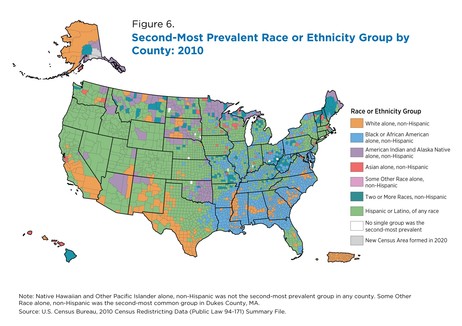
  • Prevalence maps.

In this blog, we provide a preview of these measures and explain what each can tell you about the nation’s racial and ethnic composition and diversity.

Read More

Tuesday, October 20, 2020

Celebrate World Statistics Day


October 20, 2020 is #WorldStatisticsDay. Celebrate the impactful stats and innovative data solutions that drive decision-making with the @USCensusBureau. Explore #DataTools on the #WorldStatsDay page: census.gov/WSD2020 #StatsDay2020 

Every 5 years, #WorldStatisticsDay is celebrated around the world to recognize the value of statistical systems.