Showing posts with label data. Show all posts

Thursday, July 24, 2025

New 2024 Survey of Income and Program Participation (SIPP) data released


JULY 24, 2025 — The U.S. Census Bureau today released data from the 2024 Survey of Income and Program Participation (SIPP) detailing the income and assistance program participation of individuals and households in the United States.

The SIPP is a longitudinal survey, one that collects data from the same individuals over an extended period of time and measures changes in characteristics like economic well-being, family dynamics, education, assets, health insurance, child care, and food security. 


Thursday, May 04, 2023

Access USA Trade Online Data / Census Bureau

Today's Government Information for Research blog features USA Trade Online by Census Bureau. What is it? USA Trade® Online is a free, simple, and fast way to access the monthly merchandise trade numbers.
Click here to find an example that shows data for five commodity numbers, covering three years, with a list of countries, for either imports or exports. It provides step by step instruction on how to do it. If you need further help and assistance about searching, accessing, and using this government data resource, please email govhelp@rice.edu.

Wednesday, September 22, 2021

Census Academy: New 2020 Census Redistricting Resources Available

 Census Academy: New 2020 Census Redistricting Resources Available

The Comprehensive Course for Accessing 2020 Census Redistricting Data

If you are interested in exploring 2020 Census redistricting data, check out Census Bureau's new all-level course.

It teaches you the basics about the Decennial Census, the Redistricting Data Program, Public Law 94-171 redistricting data, geographic availability, and the legacy format. You will then learn about the available sources to access these data and the features of each source.

Select one or more learning pathways to learn how to access data from the Census File Transfer Protocol (FTP), data visualizations, data.census.gov, and the Census Application Programming Interface (API).
Learn More (https://www.census.gov/data/academy/courses/comprehensive-course-for-accessing-2020-census-redistricting-data.html?utm_campaign=20210922mscacs1ccstors&utm_medium=email&utm_source=govdelivery)

How Can I Access 2020 Census Redistricting Data

There are a few ways that you can access 2020 Census redistricting data for your area. Discover three valuable resources and learn when to use one tool over others in this video tutorial.
Learn More
https://www.census.gov/data/academy/data-gems/2021/how-to-access-2020-census-redistricting-data.html?utm_campaign=20210922mscacs1ccstors&utm_medium=email&utm_source=govdelivery

Visit updated Census Academy 2020 Census page to find more helpful resources: https://www.census.gov/data/academy/topics/2020-census.html?utm_campaign=20210922mscacs1ccstors&utm_medium=email&utm_source=govdelivery

Tuesday, September 21, 2021

Finding 2020 Census Redistricting Data


Redistricting Data, P.L. 94-171, was made available to the public on data.census.gov, on September 16, 2021. This includes data for all states, the District of Columbia, and Puerto Rico, down to the census block level. In this webinar session, participants will enjoy a live demonstration of various examples on how to navigate the data.census.gov platform to access and download 2020 Census redistricting data. We will also provide participants with links on where to find additional resources and technical documentation about Redistricting Data.

Tuesday, October 20, 2020

Celebrate World Statistics Day


October 20, 2020 is #WorldStatisticsDay. Celebrate the impactful stats and innovative data solutions that drive decision-making with the @USCensusBureau. Explore #DataTools on the #WorldStatsDay page: census.gov/WSD2020 #StatsDay2020 

Every 5 years, #WorldStatisticsDay is celebrated around the world to recognize the value of statistical systems.

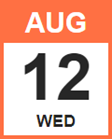
Wednesday, August 12, 2020

US Census Bureau's Webinar Today: Tips and Tricks to Access Data on Ancestry and Foreign-born Populations

Webinar Today: Tips and Tricks to Access Data on Ancestry and Foreign-born Populations

Registered United States Census Bureau Logo

Where We Come From: Tips and Tricks to Access Data on Ancestry and Foreign-born Populations

Discover the best way to access demographic, socioeconomic and housing data about foreign-born populations using data.census.gov. Learn about how we collect data, regardless of legal status, unauthorized migrants are included in Census Bureau estimates of the total foreign-born population. In this webinar, we will also explore topics such as nativity, ancestry, language, and more.

Join Us

The U.S. Census Bureau uses the term foreign-born to refer to anyone who is not a U.S. citizen at birth. This includes naturalized U.S. citizens, lawful permanent residents, temporary migrants, humanitarian migrants, and unauthorized migrants.

Gray Divider
Wednesday, August 12, 2020
  • Date: Today
  • Time: 2:00 p.m. ET
  • Dial In: 888-282-1677
  • Passcode: 5537411
  • Link: Log In Details

Help us spread the word about Census Academy. Share this on social media or forward it to a friend.

Share This

Additional Webinars Coming Soon

Monday, August 10, 2020

Tips and Tricks to Access Data on Ancestry and Foreign-born Populations

Coming Next Week: Tips and Tricks to Access Data on Ancestry and Foreign-born Populations

Registered United States Census Bureau Logo

Where We Come From: Tips and Tricks to Access Data on Ancestry and Foreign-born Populations

Discover the best way to access demographic, socioeconomic and housing data about foreign-born populations using data.census.gov. Learn about how we collect data, regardless of legal status, unauthorized migrants are included in Census Bureau estimates of the total foreign-born population. In this webinar, we will also explore topics such as nativity, ancestry, language, and more.

Join Us

The U.S. Census Bureau uses the term foreign-born to refer to anyone who is not a U.S. citizen at birth. This includes naturalized U.S. citizens, lawful permanent residents, temporary migrants, humanitarian migrants, and unauthorized migrants.

Gray Divider
Wednesday, August 12, 2020
  • Date: August 12
  • Time: 2:00 p.m. ET
  • Dial In: 888-282-1677
  • Passcode: 5537411
  • Link: Log In Details

Wednesday, August 05, 2020

Exploring Census Data Webinar Series: New Businesses Statistics

Registered United States Census Bureau Logo

Exploring Census Data Webinar Series: New Businesses Statistics

Census Bureau’s subject matter experts will provide practical ways to use our business data from economic programs to dive into business expansions and contractions.

Join Us

The session will explore several dimensions of births and deaths of businesses with highlights to include demographic components of new businesses. The webinar includes a segment on available resources and data tools with the opportunity for questions and answers.

Gray Divider
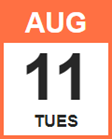
Tuesday, August 11, 2020
  • Date: August 11
  • Time: 2:00 p.m. ET
  • Dial In: 888-989-6421
  • Passcode: 9494158
  • Link: Log In Details

Event Password: census (If required, this password is only for users who join from a WebEx application or mobile app.)

Wednesday, August 19, 2015

Smithsonian's Plan for Increased Public Access to Federally Funded Research Results


On August 18, 2015 the Smithsonian Institution released its Plan for Increased Public Access to Results of Federally Funded Research  which proposes "to provide increased public access to certain peer-reviewed scholarly publications and supporting digital research data"  for research partially or wholly funded by a federal funding source. The plan applies to "all fields in which the Smithsonian conducts  research, including but not limited to the fields of science, history, art, and culture." 

Friday, May 29, 2015

Sunlight Foundation Creating Database for Criminal Justice Data

The Sunlight Foundation, a national non-partisan, nonprofit organization committed to open government, has created an inventory of publicly and privately produced criminal justice data as the first step to creating a database. The inventory, Opening Criminal Justice Data, shows what data has been collected so far and provides an opportunity for people to submit their own data, statistics or a finished report. However, no information is given on the main page about how these submissions will be evaluated. Links to data and reports already submitted can be accessed by opening the Google spreadsheet. Most of the reports presently available are from official government agencies.

Tuesday, March 31, 2015

The Importance of Data Occupations in the U.S. Economy

The Economics and Statistics Administration of the U.S. Department of Commerce released a March 12, 2015 report entitled The Importance of Data Occupations in the U.S. Economy. The report identifies "occupations where data analysis and processing are central to the work performed" and measures "the size of employment and earnings in these occupations, as well as in the industries that have the highest concentration of these data occupations."

The key findings of the report are:
  • Employment where data is central to the job was about 10.3 million in 2013 (of which 1.6 million were government workers), or about 7.8 percent of all employment. However, including occupations where working with data is at least an important part of the job dramatically increases that number: to 74.3 million jobs, or over half of the workforce.
  • Hourly wages for private-sector workers in data occupations, which are concentrated in the broad categories of business and computer/mathematical occupations, averaged $40.30 in 2013, about 68 percent higher for all occupations
  • For these top data occupations, two-thirds or more of the workers have at least a college degree; in comparison about one-third of workers across all occupations have a bachelor’s degree or higher.
  • Private sector industries with the highest concentration of data occupations added 1.8 million jobs over the last decade, representing about 31 percent of total private job growth which was four times faster than in private industries overall
  • Data intensive industries are located in many states, but the highest concentrations are in Washington, D.C.; Virginia; Massachusetts; Maryland; and Connecticut.